Sea First, Suitcase Second: Five Ferry-Led Mini Breaks for 2026
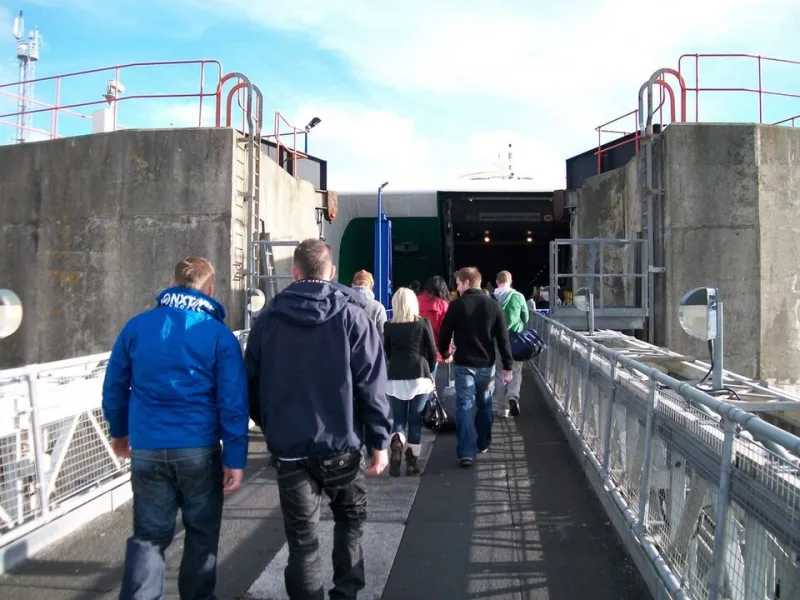
Photo: Eric Jones , CC BY-SA 2.0, via Wikimedia Commons
There is a particular kind of calm that comes from starting a trip on water. No baggage-weight anxiety, no 3am taxi to a terminal on the edge of town, no sprint through a duty-free maze. In 2026, with airport fees and hand-luggage rules still testing patience, a ferry-first mini break looks less like nostalgia and more like common sense.
The routes below are all doable as a foot passenger from England, with onward trains or buses into a city or coast worth two nights. Fares are guide prices for foot passengers, one way, booked ahead; crossings and timetables shift with the season, so confirm the finer details before you commit.
Why a ferry start wins in 2026
First, luggage. Most ferry operators are far more relaxed than airlines about what you can carry, which makes a two-night break feel less like a military exercise. Second, ports often sit close to rail links, so you can arrive in a city centre without paying for an airport transfer. Third, the crossing itself is part of the trip: a meal, a deck walk, a bit of sea air and a proper sense of departure.
1. Dover to Calais: the quick hop that still feels foreign
Crossing: about 90 minutes. Foot-passenger fare: from around £30 one way, depending on operator and sailing. Onward: bus or taxi to Calais Ville station, then TER trains to Lille and onward to Bruges or Brussels.
Dover–Calais remains the fastest way to put the Channel between you and the office. Foot-passenger policies can vary by sailing, so check that the operator accepts walk-on passengers for your chosen time. Once at Calais Ville, the rail network opens up quickly: Lille is around 90 minutes away, and Bruges is a straightforward change beyond that.
Two nights in Bruges: cross on a morning sailing, reach Bruges by mid-afternoon and spend the first evening around the Markt and Burg. Day two is for canals, the Groeningemuseum and a slow lunch of Flemish stew. On day three, take an early train back towards Calais, leaving time for the crossing home.
2. Newhaven to Dieppe: the slow Channel that rewards
Crossing: around four hours. Foot-passenger fare: from about £35 one way. Onward: Dieppe station is a short walk or bus ride from the port, with trains to Rouen in roughly 45 minutes and Paris in about two hours.
This is the route for travellers who want the sea crossing to feel like a proper pause. Newhaven is easy enough to reach by train from London and the south coast, and Dieppe rewards even a short stay with its pebble beach, castle and genuinely excellent seafood.
Two nights in Dieppe: arrive in time for an evening walk along the front and dinner near the quayside. Day two brings the Saturday market, the Château-Musée and a long lunch; if the weather turns, the fish market and cafés do the job nicely. Day three is a gentle return, perhaps with a morning coffee before the ferry.
3. Portsmouth to Le Havre: Normandy without the motorway
Crossing: around five hours 45 minutes by day, longer overnight. Foot-passenger fare: from roughly £45 one way. Onward: trains from Le Havre to Rouen take about an hour; Paris is around two hours. Local buses connect to Honfleur.
Portsmouth gives this route a proper maritime send-off, and Le Havre is a useful gateway rather than just a port. The city itself has postwar architecture worth a look, but the real draw is how easily you can reach Honfleur, Rouen or the Normandy coast without a car.
Two nights in Le Havre and Honfleur: cross by day, then take a late-afternoon bus to Honfleur for two nights in the old harbour. Day two is for the Vieux Bassin, the Eugène Boudin museum and a walk up to the chapel for the view. Day three returns via Le Havre for the ferry, with time for a bakery stop.
4. Harwich to Hook of Holland: the rail-and-sail classic
Crossing: about six hours 45 minutes by day, around eight hours overnight. Foot-passenger fare: from about £50 one way. Onward: Hook of Holland has rail links to Rotterdam in around 30 minutes and Amsterdam in about an hour.
This is one of the most useful foot-passenger routes for UK travellers because the Dutch side is so well connected. Stena Line has long offered rail-and-sail style tickets that combine the crossing with Dutch rail, which can simplify booking. Even without a through ticket, the station at Hook is close to the ferry terminal.
Two nights in Rotterdam: take a daytime crossing and reach Rotterdam for dinner. Day two is for the Markthal, the cube houses and a harbour walk; the city is compact enough for train arrivals to feel easy. Day three is a lazy morning before the return crossing.
5. Hull to Rotterdam: sleep your way to the Netherlands
Crossing: around 11 hours overnight. Foot-passenger fare: from about £65 one way, with cabin supplements extra. Onward: Rotterdam Europoort has shuttle bus links to the city and rail connections across the Netherlands.
This is the ferry break for people who like the idea of waking up in another country. You board in the evening, sleep in a cabin and arrive in the Netherlands ready for coffee rather than a departure lounge. It is not the cheapest route on this list once a cabin is added, but it turns travel time into sleep time.
Two nights in Rotterdam or Delft: arrive in the morning, drop bags and head for Rotterdam's waterfront. Day two could be a short train to Delft for canals and cafés, returning for dinner. Day three gives you a final morning before the overnight sailing home.
Ferry-first tips for 2026
Book foot-passenger tickets early for weekend sailings, especially in summer. Check whether the port terminal is walkable to the station or whether you need a local bus or taxi. Allow a buffer of at least an hour between ferry arrival and onward train, and keep an eye on seasonal timetables, which can be thinner in winter. Finally, pack light but not anxiously: the joy of a ferry start is that you do not need to fit your life into a cabin bag.
A short European break does not have to begin with a security tray. Sometimes it begins with a cup of tea on deck and the slow slide out of harbour.