The Platform Is the Trailhead: Six Car-Free Hill Days Built Around a Return Ticket
There is a particular kind of freedom in stepping off a train, lacing up your boots beside the buffer stop and setting out without a car park, a parking app or a single thought about the drive home. The station becomes the trailhead, the timetable becomes the pace-setter, and the day has a natural shape: out, up, across, down, pint, platform.
In 2026, with fuel and parking costs still doing their thing, the station-to-summit plan is less niche than it sounds. The trick is not to treat the train as an afterthought. Pick a walk that fits the service, not the other way round. Build in a buffer for the return leg, carry a map and compass rather than relying on a phone signal, and accept that a hill day in Britain is always a conversation with the weather.
These six walks are all full days, but none requires alpine ambition. They range from rough moorland to forestry tracks, with bail-outs that let you cut things short without ruining the afternoon.
Edale, Peak District: Kinder Scout's edge without the car park scrum
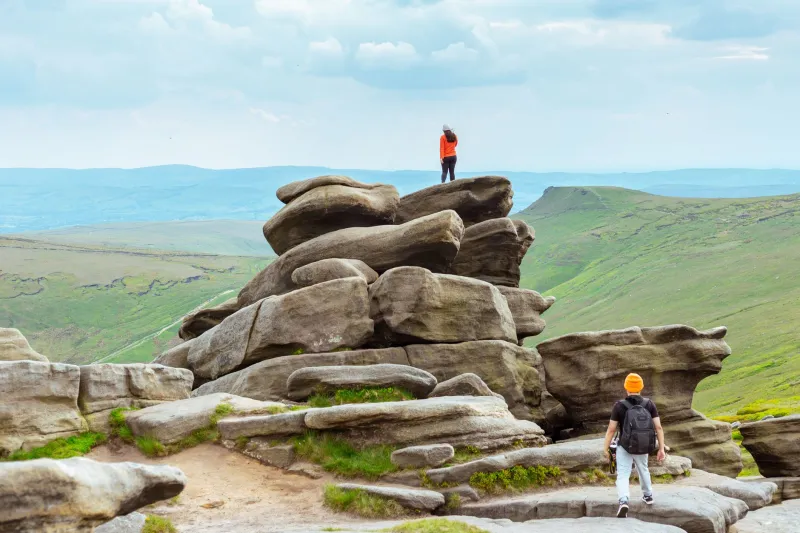
Start at Edale station and head up Grindsbrook Clough before swinging onto the Kinder plateau. The classic loop is around 13km, with rocky clough steps, peaty plateau paths and a steep descent back towards the valley. It is rough underfoot in places, so allow five to six hours and save energy for the last hour. Trains back towards Sheffield and Manchester are reasonably frequent, but check the day's timetable and aim for a departure after 16:30 if you want a comfortable finish. In poor visibility, bail out by dropping towards Barber Booth rather than pressing on across the plateau. The Old Nags Head is a short walk from the station and does exactly what a post-moorland pub should.
Church Stretton, Shropshire: the Long Mynd from the platform
This is one of the most satisfying station starts in England: step off the train, walk through town and be climbing towards Carding Mill Valley within twenty minutes. The route is about 13km, taking in Lightspout Hollow, the summit of Pole Bank and a descent through Ashes Hollow. Terrain is grassy tracks and steep valley paths rather than technical ground, but the climbs add up. Trains towards Shrewsbury and Craven Arms are generally hourly, so plan for a late-afternoon return and keep an eye on the clock on the ridge. If the weather turns, drop into Carding Mill Valley and follow the road back to town. The King's Arms is the reliable post-walk stop.
Hebden Bridge, West Yorkshire: woods, crags and a canal chaser
From Hebden Bridge station, this 11km loop heads up to Hardcastle Crags and Gibson Mill before climbing to Heptonstall and returning along the canal. It is a good mix of woodland paths, cobbled lanes and waterside cruising, with enough up-and-down to feel earned. Services on the Calder Valley line are frequent, which takes some pressure off the return, but do not mistake frequency for permission to linger too long in the pub. If legs or weather complain, cut the loop short by dropping back into Hebden Bridge from Midgehole. Stubbing Wharf, beside the canal, is well placed for a muddy-boot finish.
Betws-y-Coed, Eryri: a forest and lake day that does not need a summit
Not every hill day needs a peak. From Betws-y-Coed station, a 9km circuit through Gwydir Forest and around Llyn Elsi gives you woodland quiet, a small lake and views without committing to exposed ridgeline. The going is mostly forestry track and muddy path, with a few steep pulls. The Conwy Valley line is not a turn-up-and-go service, so this is a walk to plan around a specific train rather than improvise. If the weather closes in, stay low and follow forest tracks back to the village. Ty Gwyn Hotel, a short stroll from the platform, is the obvious place to thaw out.
Settle, Yorkshire Dales: limestone scars and a waterfall finish
Settle station puts you directly into the Dales without a car. A 12km loop via Attermire Scar, Catrigg Force and Langcliffe gives you limestone pavement, field paths and a waterfall finale. The terrain is not extreme, but limestone can be slick in the wet and the Dales weather can arrive fast. Settle-Carlisle services are limited, so this is the walk where the return train genuinely dictates the day: note your last sensible departure before you set off and leave a generous margin. If conditions deteriorate, shorten the route by returning through Langcliffe. The Golden Lion is a proper station-adjacent reward.
Grange-over-Sands, Cumbria: Hampsfell and Cartmel for the view
From Grange-over-Sands station, a 10km loop over Hampsfell to Cartmel and back by lanes makes a gentle but full day out. The Hampsfell Hospice gives you the view, Cartmel gives you the village stop, and the lanes give you an easy return when the light starts to go. Terrain is tracks, fields and quiet road, with one steady climb. Furness line trains are generally hourly, so aim to be back at the station with time to spare rather than sprinting from Cartmel. In bad weather, cut the loop short and stay on the lanes. The Cavendish Arms in Cartmel is the pub stop, with Grange's own cafes as the fallback.
The timetable rules that make it work
First, check the last practical train, not just the last train. A 22:00 departure is no use if the walk finishes at dusk and the connecting service is thin. Second, give yourself a 45-minute buffer at the station; boots, layers and a quick pint all take longer than planned. Third, carry a headtorch even in summer, because a slow descent or a wrong turn can eat the daylight. Fourth, tell someone your route and keep the map in a waterproof case. The train will wait for no one, but a sensible plan means you will not be asking it to.
Car-free hill days are not about being purist. They are about removing the faff and keeping the good bits: the climb, the view, the pub, the ride home. Pick one of these six, check the timetable, and let the platform do the rest.