Bed, Not Boarding Pass: Five European Cities Worth Taking the Sleeper To
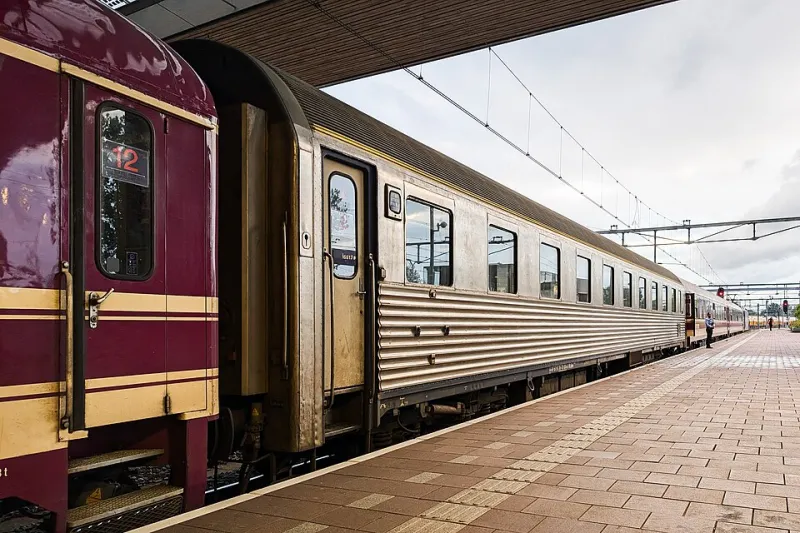
Photo: Bvcmz248.5, CC0, via Wikimedia Commons
There is a particular kind of smugness available at 7am on a European platform when you have slept — badly, but slept — through the journey. No baggage carousel. No £9 Pret porridge. No taxi queue. Just you, a slightly creased shirt and a city waking up around you.
Overnight trains from London are not quite the seamless sleep-through-the-Channel fantasy some brochures suggest. There is no direct sleeper from St Pancras to Berlin or Vienna. What you get is a relay: a Eurostar to Brussels, Paris or Amsterdam, then a proper sleeper onward. Done well, it is excellent. Done badly, it is a missed connection and a very expensive lesson in timetable padding.
This is the practical version for 2026, covering Berlin, Vienna, Amsterdam, Zurich and Venice — and being honest about which routes actually save you a hotel night.
First, the London reality check
The key rule: book the Eurostar leg earlier than you think you need to. If you are on separate tickets, leave at least 90 minutes between arrival and the sleeper departure, and more if you are changing stations in Paris. Through tickets are rare, so the connection is your problem, not the operator's.
London to Brussels is around two hours; London to Paris a little over two. That makes an afternoon Eurostar plus an evening sleeper perfectly civilised. Amsterdam is longer by day, but it is also the gateway for several Nightjet services.
Pack for a train, not a hotel. A small wheelie case plus a rucksack is the sweet spot. There is no checked luggage on sleepers, and cabin space is tighter than the photos suggest.
The five, with the hotel-night maths
Berlin: the one that actually works
Eurostar to Brussels, then the European Sleeper onward to Berlin. You leave London in the afternoon, have a beer and a plate of something in Brussels, board in the evening and wake up in Berlin with the whole day ahead of you.
This is the route that genuinely saves a hotel night without adding a punishing amount of faff. A couchette is the sensible middle ground: not a hotel bed, but a proper lying-down sleep. Expect roughly £120–£220 one-way for the sleeper element depending on season and cabin, plus your Eurostar fare. Book three to six months ahead for weekend departures.
Vienna: the classic Nightjet
Vienna is the romantic answer, and for once the romance is mostly justified. Eurostar to Brussels or Amsterdam, then an ÖBB Nightjet east. It is a longer relay, so treat the connection seriously, but the payoff is arriving in a city of coffee houses and imperial architecture with a full day to use.
A private compartment makes a real difference here. It is not cheap — think several hundred pounds all-in — but if you were going to pay for a Vienna hotel and a day of holiday, the maths can work. Couchettes keep the cost down. Book as soon as the 180-day window opens if you are travelling around a holiday or a big event.
Amsterdam: the gateway, not the sleeper
Amsterdam is on this list because it is the useful hinge for other routes, not because you should book a bed to get there. The direct Eurostar is quick and often reasonably priced. Taking a sleeper to Amsterdam is novelty with a pillow.
Where Amsterdam earns its place is as the change point for Nightjet services to Vienna and Zurich. If you are using it as a gateway, brilliant. If you are counting it as a hotel-night saver, it is not. Just take the daytime train and spend the money on dinner.
Zurich: efficient, pricey, surprisingly useful
Eurostar to Amsterdam, then the Nightjet to Zurich. You arrive in the morning, which is exactly when Swiss trains and Swiss bakeries are at their best. The route saves a hotel night and gives you a full day in the city or a clean connection onward to the mountains.
Be warned: Switzerland is not where your savings go to flourish. The sleeper may cost less than a Zurich hotel room, but coffee, lunch and a tram ticket will quietly even things out. Still, for a winter city break or a ski-adjacent trip, it is a clever use of a night.
Venice: the long, romantic way
Venice is the one that requires a reality check. There is no simple London–Venice sleeper. The realistic route is Eurostar to Paris, a Nightjet onward towards Vienna or Munich, then a daytime connection into Venice. It is a sleeper-led journey rather than a single overnight.
That does not make it a bad idea. Arriving at Santa Lucia by train, with the Grand Canal outside and no airport bus in sight, is one of Europe's great travel moments. But only count it as a hotel-night saver if you are genuinely replacing a Venice hotel night you would otherwise have paid for. If you are doing it purely for the story, budget for the extra time.
Cabin grades without the romance tax
Seated carriages are the cheapest option, often £40–£80 for the sleeper leg, but they are for people who can sleep upright and do not mind arriving slightly folded. Couchettes — usually four or six berths — are the value sweet spot. You get a pillow, a blanket and a shelf for your bag. Private compartments cost more and are worth it if you are travelling as a couple or simply value a door.
Bring an eye mask, earplugs and a refillable water bottle. A small padlock for your bag is sensible. Slippers or flip-flops are not essential, but they make the 2am loo trip less grim. Do not expect hotel-grade air conditioning or a shower in every cabin.
Booking windows and luggage reality
Nightjet generally opens around 180 days ahead. European Sleeper releases tickets in batches, so sign up for alerts if you have fixed dates. Eurostar tickets usually go on sale around six months out. Friday and Sunday nights are the first to go, as are school holiday windows.
Luggage is the quiet make-or-break. One compact case plus a backpack is plenty. Keep passports, cards and medication on you, not in the luggage rack. If you are changing in Brussels or Paris, remember you may need to move between platforms with that bag — so pack lighter than you think.
Which routes genuinely save a hotel night?
Berlin and Vienna are the clear winners: evening departure, morning arrival, full day gained. Zurich works if you will use the early arrival. Venice is a wonderful long way round but not a simple hotel-night hack. Amsterdam is a gateway, not a sleeper destination.
Start with Berlin. It is the simplest relay, the most forgiving connection and the best proof that swapping the airport scramble for a bunk can actually improve the trip. If you like it, graduate to Vienna. The sleeper is not a stunt. It is just transport with a bed — and sometimes that is exactly what a city break needs.