Platform to Punsch: Five Christmas Market Cities Where the Train Does the Work in 2026
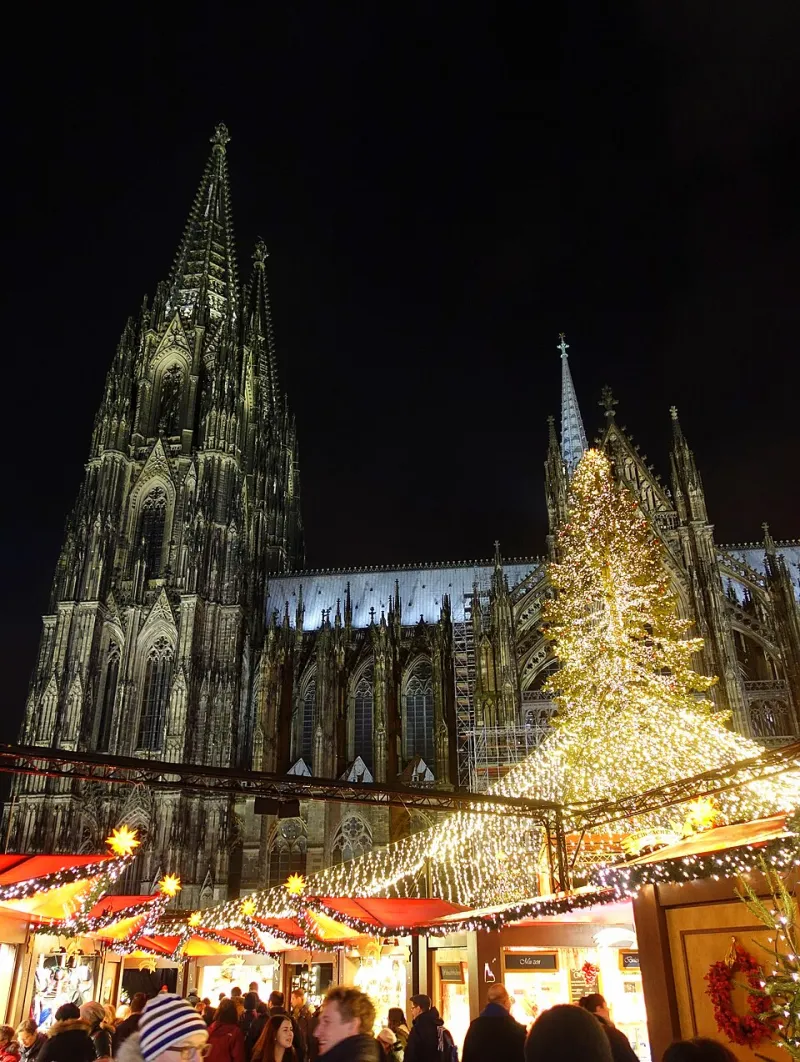
Photo: Daderot, CC0, via Wikimedia Commons
A Christmas market break doesn’t have to begin with a 4am airport run, a plastic tray of lukewarm coffee and a taxi queue in the rain. For British travellers, the train often does the whole job: you leave central London, settle into a seat, and arrive in a city where the market lights are already on. No hire car, no baggage carousel, no hunt for a parking space near a medieval square that was never designed for a Vauxhall Corsa.
The trick is choosing cities where the station is part of the break rather than a chore at either end. These five all work by rail from the UK, with sensible connections and markets that reward a short walk from the platform. They also suit different appetites: Lille for a quick hit, Cologne for a proper festive wallow, Strasbourg for the long-weekend romantics.
Why the train changes the mood
Flying to a Christmas market can feel oddly fragmented. You spend an hour getting to the airport, two hours waiting, an hour in the air, then another hour transferring into town. By the time you reach the first stall, you’re already thinking about the journey home.
Eurostar trims that down. From St Pancras you can be in Lille in about 80 minutes or Brussels in around two hours. Add a straightforward connection and Cologne, Strasbourg and Bruges come into range without a plane. You still need to book sensibly and allow time for passport checks, but the overall shape of the trip is calmer. You arrive with energy for an evening wander rather than a desperate need for a lie-down.
It also makes packing easier. A small cabin bag and a pair of comfortable boots will do. Christmas markets are not a black-tie affair; they are cobbles, steam and paper cups. Dress for standing around in the cold and you’ll enjoy it far more than you would in a carefully planned outfit.
Lille: the one-night classic
Lille is the obvious first stop for a reason. Eurostar runs direct from London, and Lille Flandres is about ten minutes’ walk from the Grand Place. That short hop makes it ideal for a single night, especially if you take an early train out and a late one back.
The main market fills the Grand Place with wooden huts, lights and a big wheel, but the better move is to walk the extra few minutes to Place Rihour. It’s smaller, a bit less crowded, and feels more like a local festive ritual than a photo opportunity. Grab a mug of something warm, then loop back through the old town streets towards the station.
One night is genuinely enough here if your goal is markets and a decent dinner. Two nights would let you add the Palais des Beaux-Arts or a slow lunch, but Lille works beautifully as a short, sharp Christmas fix. Book a hotel near the centre rather than near the station; the walk back in the evening is part of the pleasure.
Brussels: markets, waffles and a metro ride
Brussels is often treated as a stepping stone, which is a shame. The Winter Wonders market spreads around the Grand Place and Sainte-Catherine, and the walk from Brussels Midi is manageable at around 25 minutes if you’re travelling light. If that sounds like too much with a bag, the metro takes minutes and saves your shoulders.
The Grand Place is the showpiece, but Sainte-Catherine is where you’ll find a more relaxed crowd and a better chance of sitting down. The fish market area becomes a cluster of stalls and lights, and it’s worth wandering a few streets beyond the obvious centre. Brussels rewards a bit of aimless walking.
One night is doable if you stick to the markets and a meal. Two nights makes more sense if you want to combine the Christmas stalls with a brewery visit or a day trip to Bruges. The city is also a natural rail hub, so it’s a useful base if you’re building a slightly longer itinerary.
Cologne: off the platform and into the stalls
Cologne is the city that makes rail travel look almost unfair. You step off the train at Köln Hauptbahnhof, walk out of the station, and the cathedral is right there — with market stalls clustered at its base. It is one of the most satisfying station-to-market arrivals in Europe.
The cathedral market is the headline, but don’t stop there. Alter Markt and Heumarkt are a short walk through the old town and have a slightly different atmosphere, with fewer tour groups and more room to breathe. The walk between them is part of the day: lights overhead, the river nearby, and plenty of places to pause.
Getting there from the UK usually means Eurostar to Brussels, then a high-speed train to Cologne. Allow a comfortable connection in Brussels; the change is straightforward but you don’t want to be sprinting with a suitcase. Two nights is the right call here. Cologne has enough markets, museums and riverside wandering to fill a full day without rushing.
Strasbourg: the long connection that earns its keep
Strasbourg is the most involved journey on this list, and it’s worth being honest about that. The usual route is Eurostar to Paris Nord, a transfer to Gare de l’Est, then a direct train to Strasbourg. The cross-Paris bit is the awkward part, so leave at least 90 minutes between arrival and departure. A metro ride or a short taxi both work; just don’t book a connection so tight that a delay turns into a crisis.
Once you’re there, Strasbourg is deeply Christmassy in a way that feels almost theatrical. The Christkindelsmärik at Place Broglie is about 15 minutes’ walk from the station, and the old town around the cathedral is a maze of lights, wooden stalls and very good tartes flambées. It’s busy at weekends, so a weekday arrival is kinder if you can manage it.
Two nights is the minimum here. The journey is too long for a smash-and-grab visit, and Strasbourg rewards a slower pace: a morning wander, an afternoon market, a proper dinner, then another loop of the lights after dark. It’s the sort of place where the evening is the main event.
Bruges: small, sweet and best with a sleep
Bruges is not the biggest Christmas market city, and that’s part of its appeal. The market in the Markt is compact, the lights are lovely, and the whole place feels like a snow globe even when it’s merely drizzling. The station is about 20 minutes’ walk from the Markt, or a short bus ride if you’re carrying more than a rucksack.
The market itself won’t fill a whole day, so use the rest of your time for the side streets, the canals and the quieter squares. Bruges is best when you stop trying to tick things off and just wander. One night is possible if you’re coming from Brussels, but two nights lets you see the city after the day-trippers have gone and the lights have settled.
The rail route is straightforward: Eurostar to Brussels, then a direct train to Bruges. It’s a good add-on to a Brussels break, but it also works as a standalone mini-break if you book an early outbound and a late return.
One night or two?
Lille and Brussels are the one-night candidates. They’re close, the markets are central, and you can have a satisfying evening without feeling rushed. Cologne, Strasbourg and Bruges are better with two nights. Not because there’s an enormous amount to do, but because the journey deserves a proper pause at the other end.
If you’re booking a one-night trip, prioritise a central hotel and a late return train. If you’re booking two nights, don’t overfill the first day. Christmas markets are best enjoyed in small doses with warm drinks in between.
Booking bits that matter
Book rail early, especially for weekend travel in December. Eurostar fares tend to climb, and the good connections around Brussels and Paris sell out first. Check whether your ticket is a through fare or separate tickets; if it’s separate, leave extra time for the change.
Pack light, wear boots you can stand in for hours, and keep a small bag for gloves and a reusable cup. Most importantly, check market dates before you commit — they vary by city and year, and a Christmas market break without the market is just a cold city break with better lights.